

The Construction of a Tale
What a Car-Sick 8-Year-Old and a Storytelling Masterclass Taught Me
"Once upon a time..."
Wait, scratch that.
"It was a cold, dark winter night in the middle of a dense forest..."
No, no, let me try again.
"9:00 AM on a bright and sunny Monday…"
It’s amazing, isn't it? In just three brief sets of words, you went from a fairy tale to a gothic mystery, to a crisp modern routine. Three opening lines, three entirely different worlds conjured in just an instant. That is the immediate, visceral power of an opening—it doesn't just start a story, it sets the entire mood.
We often think storytelling is a rare gift that authors or theater performers are blessed with. But the truth is, humans are wired for drama.
Years ago, my son was eight years old, and we were making the long trek to the Bangalore airport. Midway through the journey, he got severely car sick. It was a messy, stressful ordeal—he threw up, we had to pull over, change his clothes, scramble to switch cars, and somehow keep moving so we wouldn't miss the flight. Objectively, it was an annoying, linear sequence of travel mishaps.
But a few days later, I overheard him narrating the incident to a relative.
Suddenly, it wasn't a standard car sickness episode. It was an epic battle against gravity, motion, and time! He described the gurgling in his stomach, the heroic roadside pitstop, the dramatic wardrobe change on the highway, and the exciting vehicle swap. There was so much flair and suspense that the entire room was hanging on his every word. He had elevated a mundane, unpleasant event into a gripping piece of theatre.
There was no script; he just went with the natural human instinct to make an audience “feel” an experience.
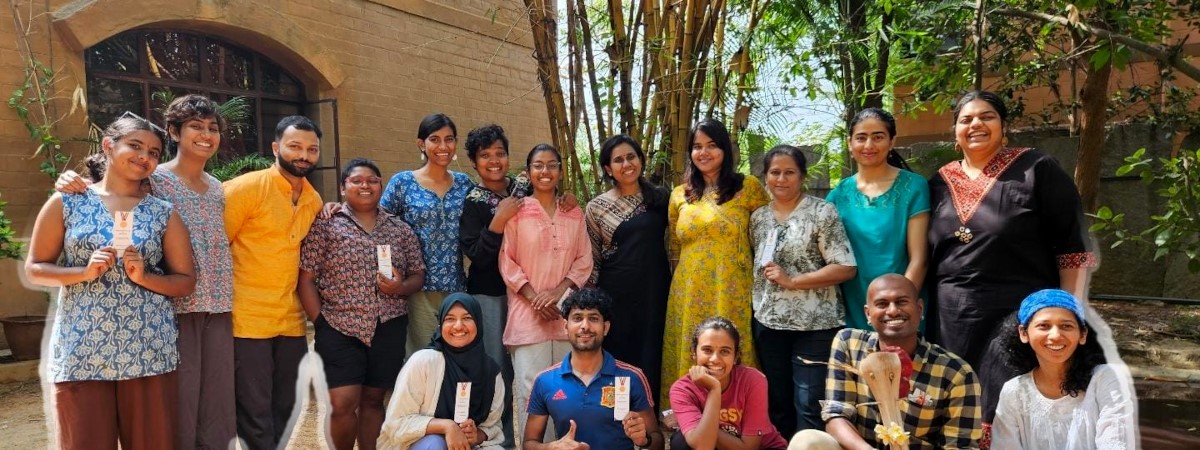
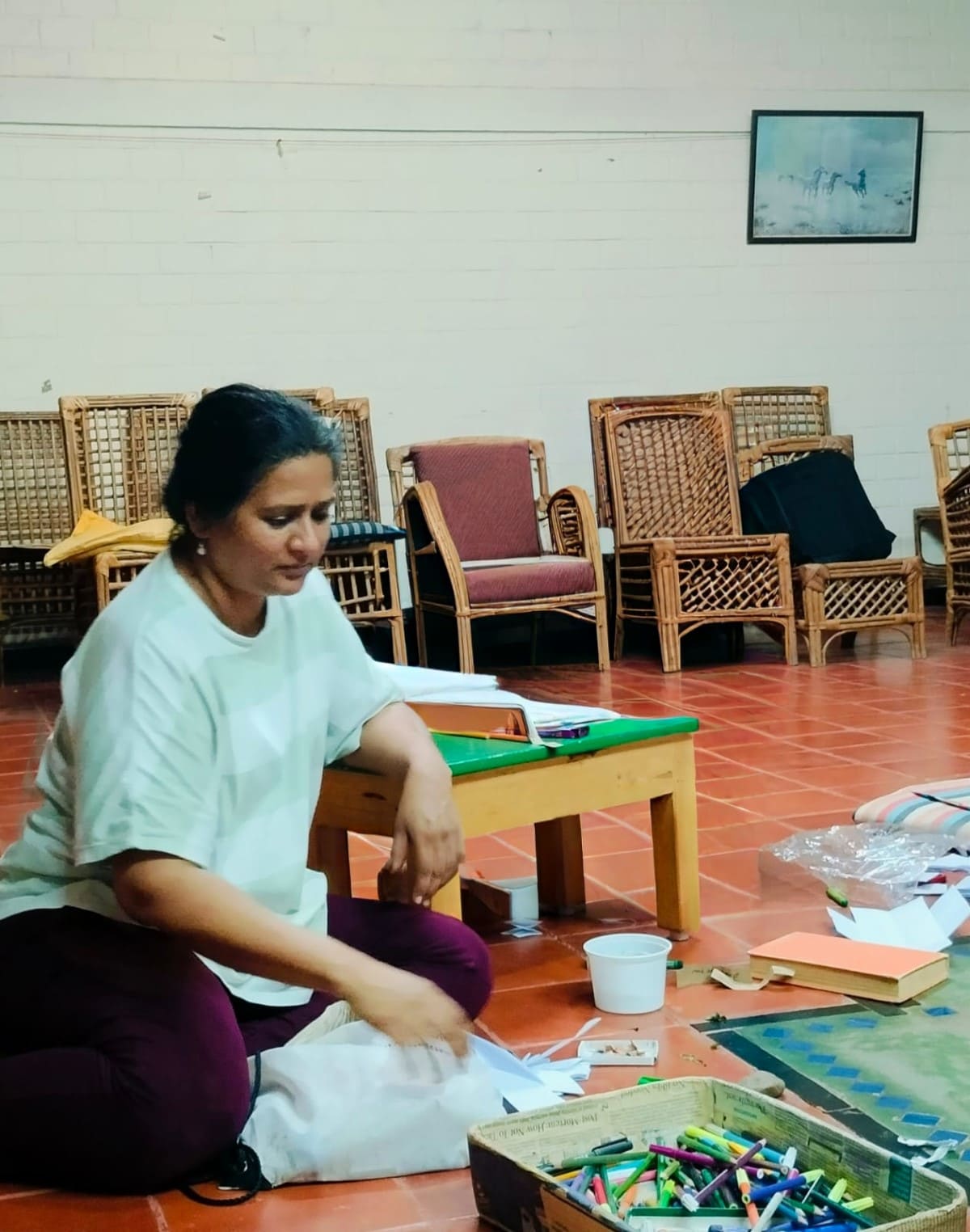
This natural instinct is exactly what the incredible Priya Muthukumar taps into. The TFN fellows recently attended a masterclass by Priya, and it completely unraveled my understanding of how a story moves from the page into the air.
Priya provided the architecture behind creating a compelling story. She showed us how it relies on a balanced trio: Setting the Mood, introducing a Conflict, and guiding the listener toward a Resolution. Without a clear conflict, you just have a sequence of events (like my drive to the airport). With it, you have a journey.
But the real magic of Priya’s session lay in how that journey is delivered.
She demonstrated how to use your voice and how Volume & Pace matter. Dropping to a whisper forces an audience to lean in; accelerating the pace makes their hearts beat faster.
Tone & Word Stress- Emphasizing a single word can alter the entire weight of a sentence.
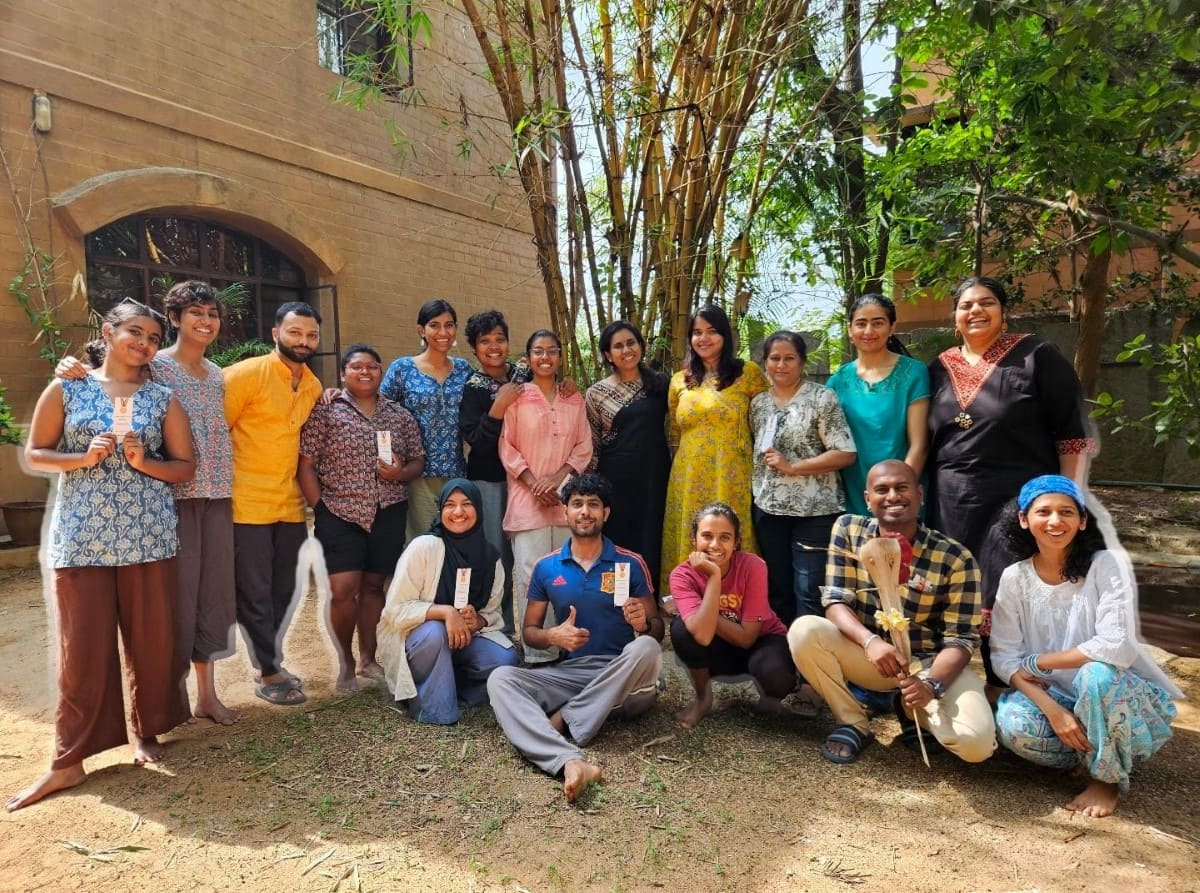
An enchanting part of her session was the integration of natural sound instruments. By using simple props to mimic thunder or the patter of rain, she proved that you don't need expensive special effects to create immersion. Her techniques for enacting animals led us to shed our stiffness and embrace the raw, physical movements of the living world.
A story isn't a monologue; it’s a relationship between the teller and the listener. Priya used songs, rhythmic music, and physical energizers to keep the room's energy high.
So whether you are trying to teach young students about nature, or you're an eight-year-old recounting a disastrous road trip, the tools are the same.
Storytelling is an exemplary form of communication. Thanks to Priya's insights, I look at every regular Monday morning, every cold forest night, and yes, even every bumpy car ride to the airport, as a story just waiting to be told.
-----
 Shared by Rashi Baid, Teach for Nature Fellow, 2026 Batch, Bengaluru, Karnataka